Founder testimonial
A Asymmetric Investor Pipeline
Build the fundraising machine
around the founder.
90-day founder-side operating system
A 90-day investor pipeline system for venture-scale founders: investment positioning, target investor research, founder-approved outreach architecture, follow-up cadence and traction updates—so fundraising stops becoming a full-time side quest.
Founder-side advisory + pipeline operationsProcess is controllable. Capital is not. No financing outcome is guaranteed.
01 Defensibility02 Investor fit03 Update loop
Watch the free trainingHow seed founders build a consistent investor pipeline.
ASYMMETRIC VENTURESINVESTOR PIPELINE · FREE TRAINING
AV
Speak directly with AmitSee whether your round is a fitNo financing outcome is guaranteed
Founder feedback
The system is easier to understand
when founders explain it.
Two early founder perspectives on the Investor Pipeline work—captured vertically, unpolished, and in their own words.
Founder testimonial
Why Asymmetric built this
The deck audit was the doorway.
The investor pipeline was the real product.
The pattern emerged from recurring founder reviews and the rooms around them—not from a generic fundraising playbook.
01
Great founders were still losing time to fundraising.
Operators with real traction were cleaning lists, chasing introductions and managing follow-up instead of creating the new proof investors needed to see.
02
Polished decks were not always defensible.
Founder-market fit was buried. Traction did not always reconcile. Market size was difficult to trust. Use of funds did not always connect to a mechanical growth engine.
03
Warm introductions did not replace a pipeline.
A handful of introductions creates pressure. A founder-approved investor universe creates options, learning and a repeatable operating rhythm.
04
Follow-up was treated like a reminder instead of evidence.
Investors who were not ready now often disappeared. The missing piece was a monthly traction update loop that creates a reason to re-enter the conversation.
The invisible second company
Founders end up running
two companies at once.
There is the operating company—and the invisible fundraising company built from research, decks, outreach, follow-up, notes and updates.
Without a system
The founder becomes the fundraising ops team.
—Research who is actually active
—Rewrite the story for every new conversation
—Track passes, maybes and follow-ups
—Remember who needs the next traction update
—Restart momentum when the round goes quiet
→
With Asymmetric
A fundraising operating layer sits around the founder.
✦Target universe built around stage, thesis, check size and timing
✦Investment story and deck pressure-tested before amplification
✦Founder-approved messaging and controlled launch waves
✦Follow-up and update logic maintained as a system
✦The founder stays focused on traction and investor conversations
Three fundraising asymmetries
What wins is not
what founders expect.
The service is organized around three belief shifts that appeared repeatedly in founder audits and investor conversations.
01 / Defensibility
Investor defensibility beats deck polish.
A beautiful deck gets attention. A reconciled, traceable investment argument gives an investor something they can defend to the rest of the partnership.
Old: “Make it impressive.”
New: “Make every important claim defendable.”
New: “Make every important claim defendable.”
02 / Fit
Investor fit beats investor volume.
A database is an input. The strategy is who should see the company first, why they fit, and what the first outreach wave is designed to learn.
Old: “Fundraising is a numbers game.”
New: “It is a fit game that uses numbers.”
New: “It is a fit game that uses numbers.”
03 / Momentum
The update loop beats the one-time blast.
A first touch asks for attention. A traction update earns attention by showing that the company changed while the investor was watching.
Old: “A pass is the end.”
New: “If the objection changes, the investor can change.”
New: “If the objection changes, the investor can change.”
Target investor universe
You do not need more names.
You need fewer wrong conversations.
Research starts broad enough to create options, then gets tighter through the four filters that make an investor strategically relevant.
Hover the filters to see the universe compress.
FILTER 01 · STAGE FITSEED / PRE-AInvestors whose current mandate matches the round you are actually raising.
Illustrative targeting logic · hover each filter
The 90-day operating cadence
From audit to
operating pipeline.
Architecture first. Controlled outreach next. Evidence-driven follow-up throughout.
Days 1–10 / Architecture
Make the company launchable.
Investment positioning + priority deck triage
Two-sentence investment thesis
Round narrative, use of funds + milestones
Target investor profile + research universe
Messaging, sequencing + pipeline structure
Weeks 2–12 / Launch waves
Turn the story into conversations.
Founder-approved email + LinkedIn messaging
Controlled waves designed to learn
Reply categorization + next-step logic
Qualified responses routed to the founder
Positioning refined from real feedback
Monthly / Update loop
Give the right investor a reason to reconsider.
Traction review: growth, product, pilots + round activity
Focused investor update memo
Warm reactivation of relevant conversations
Evidence matched to prior objections
Future touchpoint preserved for qualified investors
The founder owns the raise. Asymmetric builds the research, positioning, messaging, pipeline logic and update system around it.
Start My Investor Pipeline ↗Investor-grade diligence
Do not make the company louder
until it is defensible.
The strongest investment story is compressed, traceable and mechanically connected to the business underneath it.
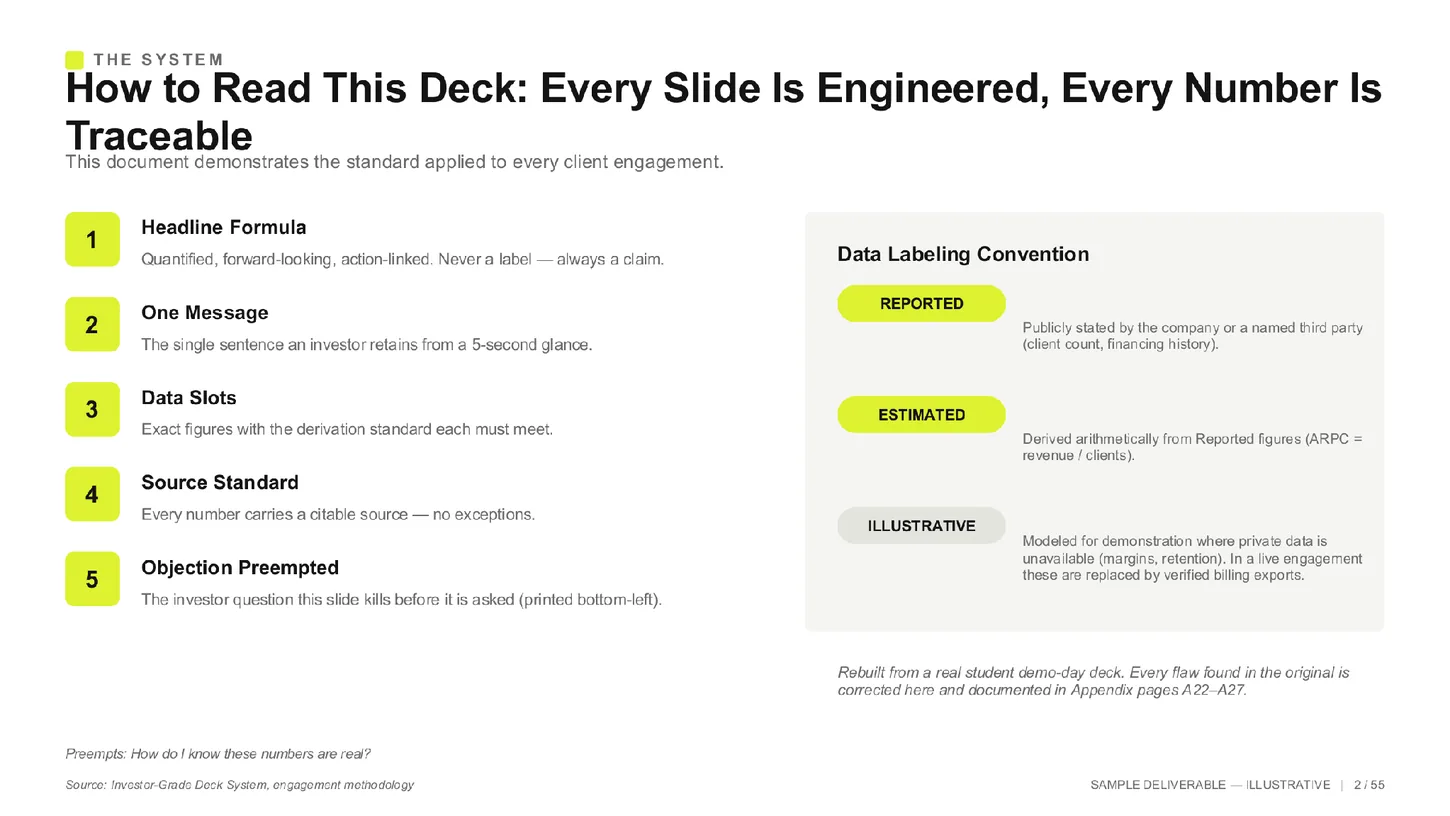
Every slide engineered · every number traceable
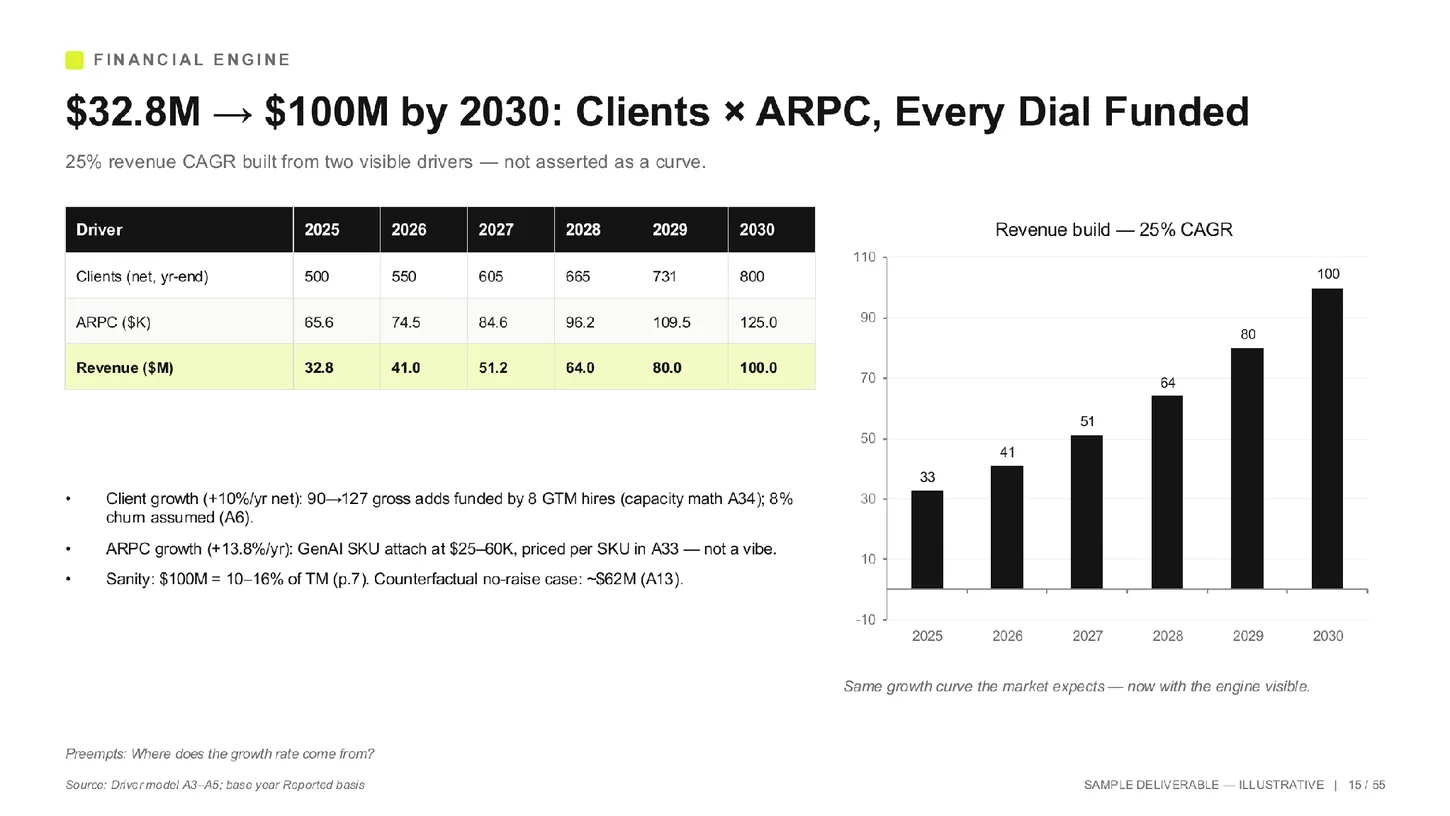
No curve without the machine beneath it
Who this is for
The pipeline only helps when
the company is ready to use it.
Strong fit
We should probably talk if…
✦You have a venture-scale thesis and are raising pre-seed, seed, or preparing for the next institutional round.
✦You have something real to send: product, pilot, traction, technical wedge, or a credible working deck.
✦You can take the investor conversations while a system handles research, positioning and cadence.
✦Your company keeps producing new evidence worth putting into the update loop.
Not the right bottleneck
This is not designed for…
—Founders looking for guaranteed meetings, financing or term sheets.
—Companies with no credible proof point where product or traction must come first.
—Founders who want someone else to own the fundraising conversation.
—Engagements requiring broker-dealer or placement-agent activity.
Where the insights come from
We discovered the bottleneck
in the room.
Founder panels, private ecosystem events, live deck and diligence reviews, and repeated conversations with venture-scale founders created the pattern recognition behind the Investor Pipeline.

Founder ecosystem programming · Midtown Manhattan
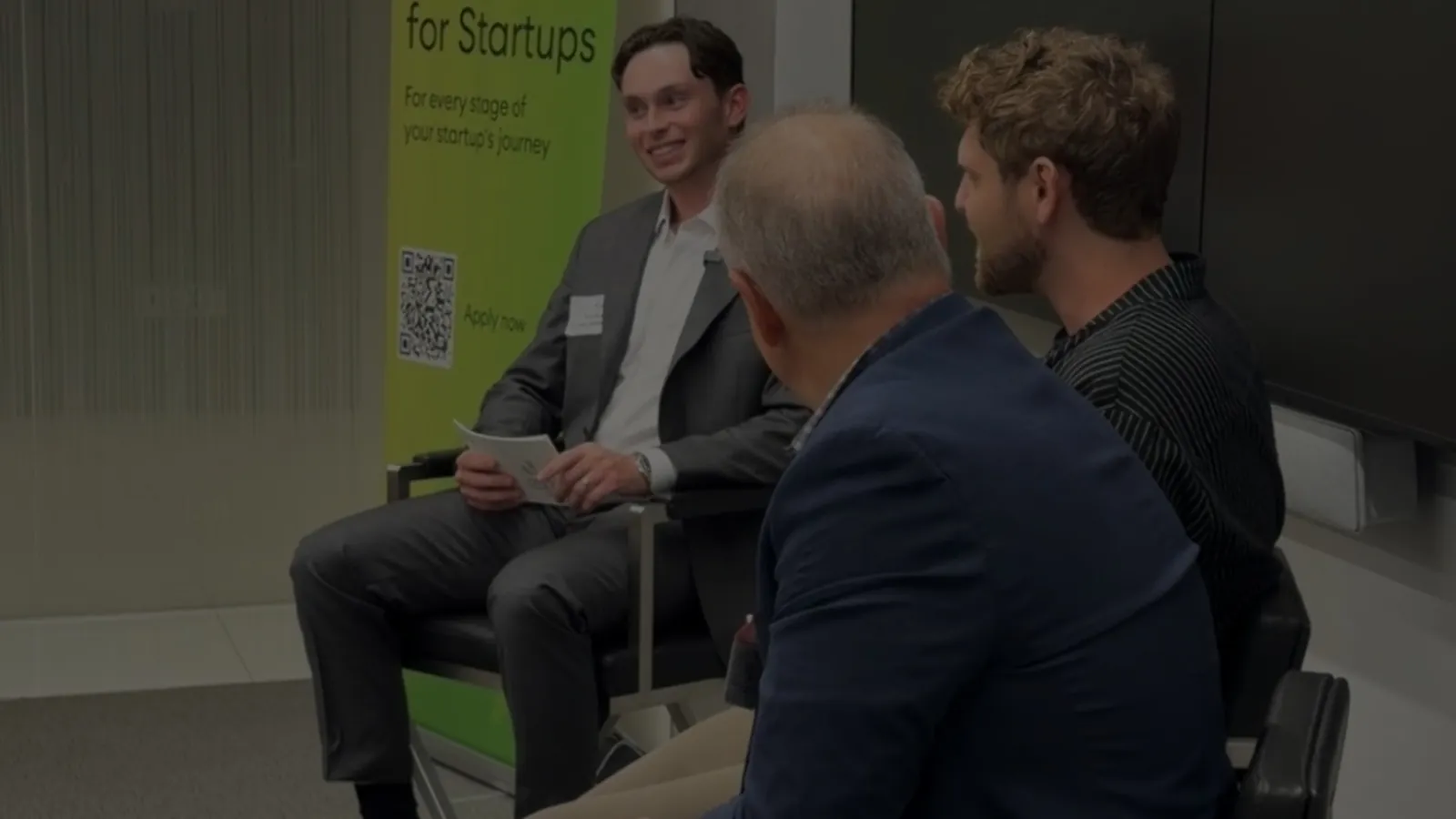
Founder panels · operator conversations · live pattern recognition
 Chord
Chord Comp AI
 Deel
DeelAsymmetric Insights
What the room
keeps teaching us.
Why AI-Generated Pitch Decks Get Thrown Out Faster Than Founders Think
The problem is not that you used AI. The problem is that one hallucinated market number, inconsistent traction metric or invented assumption can poison an otherwise credible diligence trail.
Read article →
Your Use-of-Funds Pie Chart Is Not a Capital Strategy
“40% marketing, 30% product, 30% hiring” tells investors where the money goes. It does not tell them what the money produces.
Read article →
The Metric We Keep Moving Into Investor Subject Lines
Founders often lead outreach with the category. When the company has real velocity, the growth itself can be the reason the email gets opened.
Read article →
You Are Giving Two Pitches. Most Founders Only Prepare for One.
The first pitch is founder to investor. The second is investor to partners. Your deck has to work when you are no longer in the room.
Read article →
The Risk Slide Founders Avoid Is Often the One Investors Need
Every startup has risk. Pretending otherwise can be more alarming than naming the risks and showing how management intends to contain them.
Read article →
Why a 3X Outcome Can Still Be a Weak VC Case
“A good business outcome” and “a fund-returning venture outcome” are not always the same thing. Your deck should show the upside, downside and assumptions between them.
Read article →
The decision frame
Keep chasing lists.
Or install the system.
Use a short fit call with Amit to pressure-test the investment story, the target investor universe, and the follow-up system around your round.
Start My Investor Pipeline ↗Asymmetric Ventures provides founder-side venture advisory, fundraising communications and pipeline support. We do not act as a broker-dealer or placement agent and do not guarantee investor meetings, financing, term sheets, or capital outcomes. The founder owns investor communications and the fundraising decision process.